Understanding Thousands
Last updated:
A thousand is ten hundreds. In a four-digit number such as 1,234, the left-hand digit counts thousands: 1,234 is 1 thousand, 2 hundreds, 3 tens and 4 ones, or 1,000 + 200 + 30 + 4.
Why thousands feel like a jump
Up to a hundred, a child can picture a number: a hundred square fits on a page. Thousands are different — nobody counts a thousand things one by one, so the number starts to feel like a random label. The fix is to show that a thousand is built exactly the same way as everything before it.
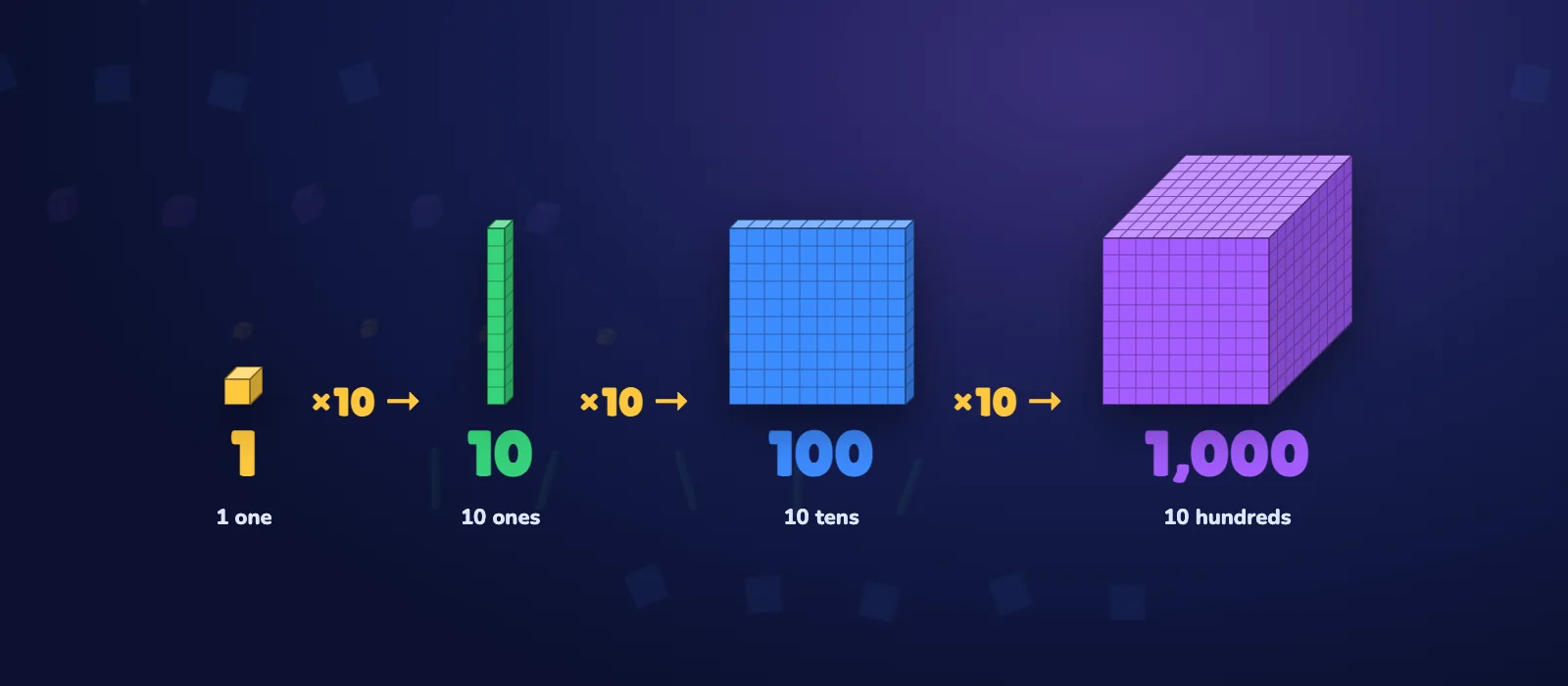
10 hundreds = 1 thousand
The trading chain from hundreds, tens and ones simply carries on: 10 ones make a ten, 10 tens make a hundred, and 10 hundreds make a thousand. Each step is ten times bigger than the one before.
Reading 1,234
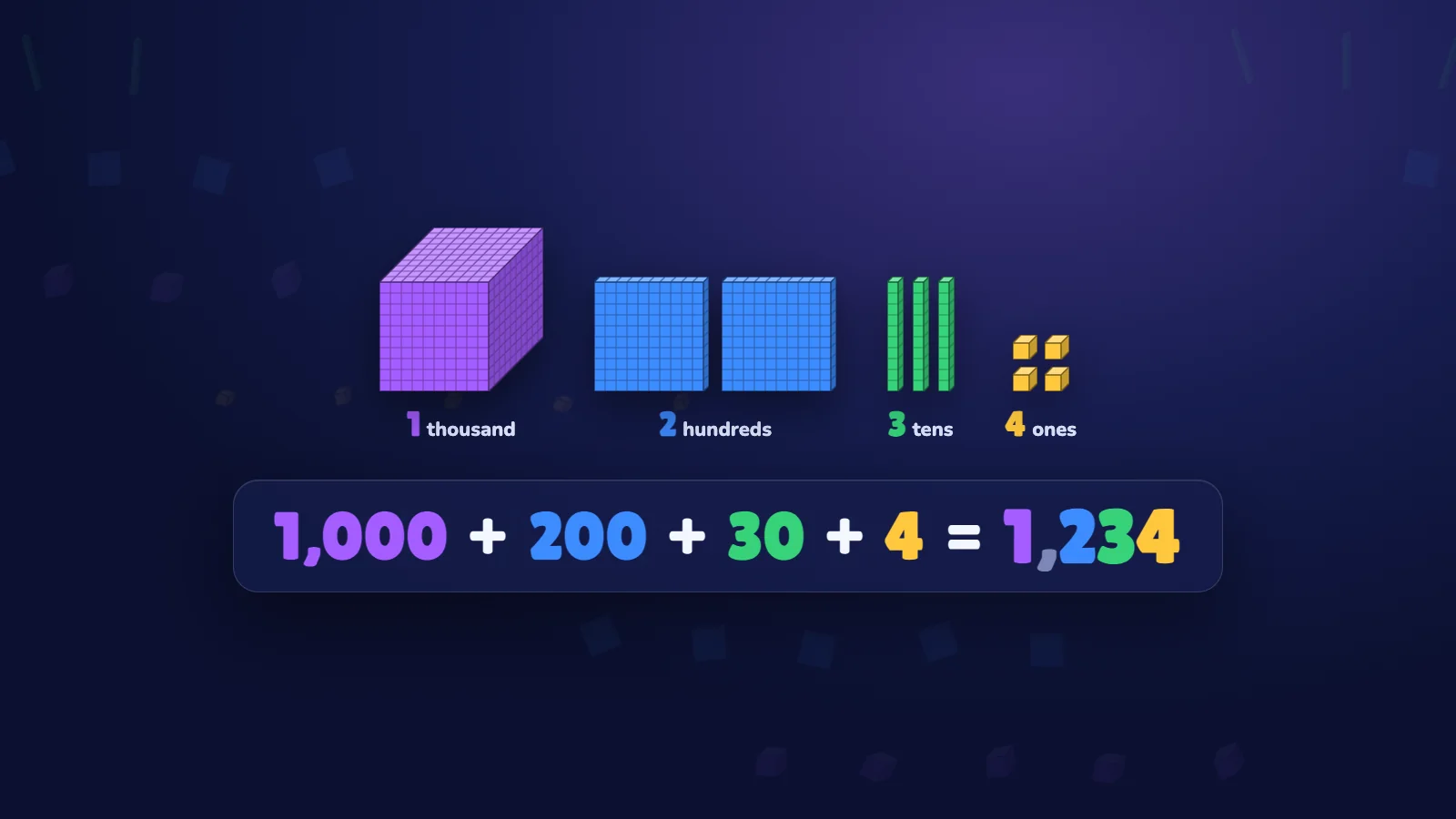
Read it place by place: 1 thousand, 2 hundreds, 3 tens, 4 ones. Say it aloud: “one thousand, two hundred and thirty-four”. Written as parts: 1,000 + 200 + 30 + 4. The comma after the 1 marks where the thousands begin.
The zeros are the tricky part
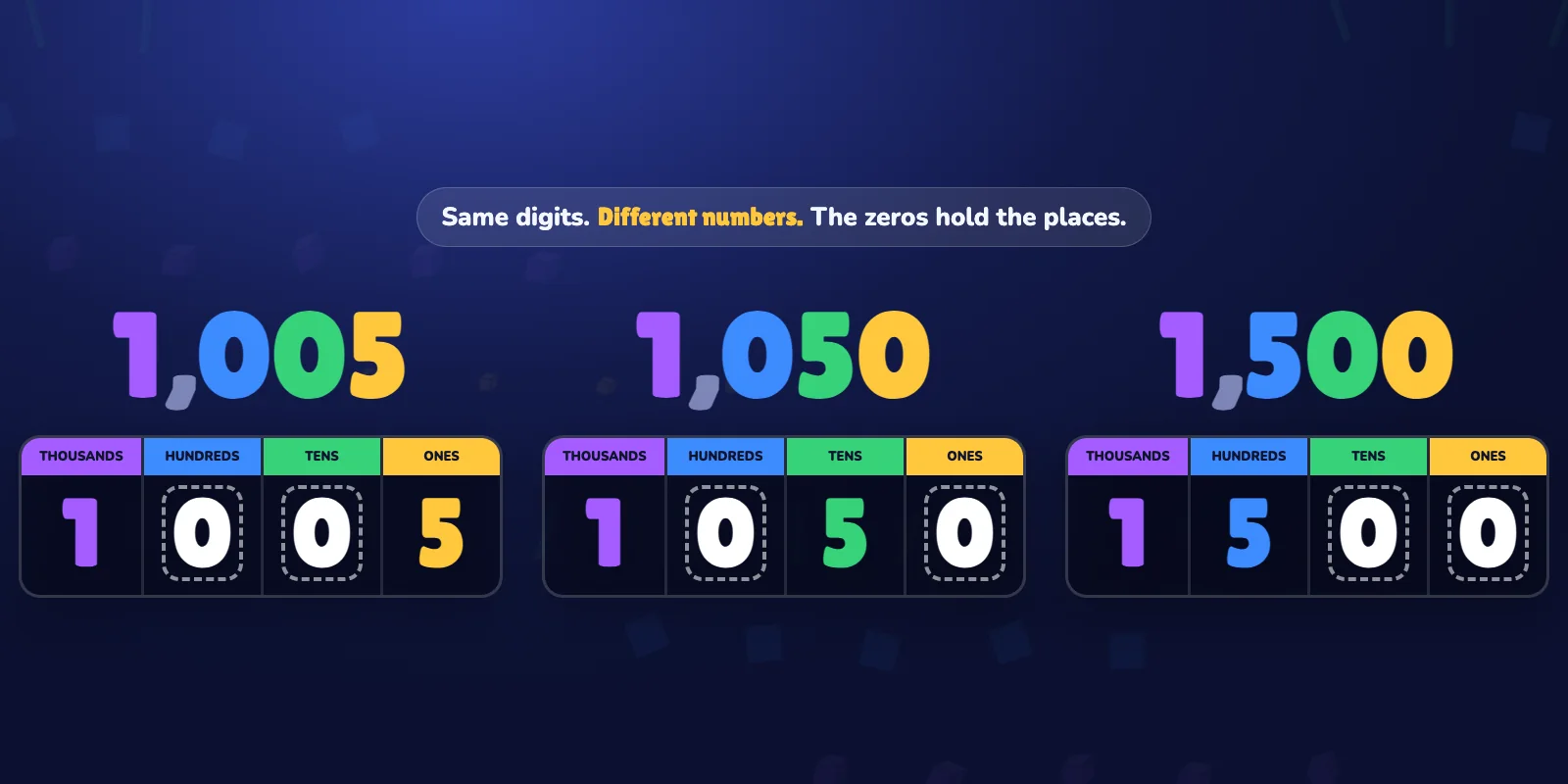
1,005, 1,050 and 1,500 use the same digits, but they are very different numbers. In each one, the zeros hold a place open:
- 1,005 — 1 thousand, 0 hundreds, 0 tens, 5 ones
- 1,050 — 1 thousand, 0 hundreds, 5 tens, 0 ones
- 1,500 — 1 thousand, 5 hundreds, 0 tens, 0 ones
- 2,040 — 2 thousands, 0 hundreds, 4 tens, 0 ones
- 7,090 — 7 thousands, 0 hundreds, 9 tens, 0 ones
- 9,999 — the biggest four-digit number; add 1 and every place fills up and trades, giving 10,000
Try at home
- Build 1,234. Use bags of 100 rice grains, bundles of 10 straws, or anything you can group. Ten bags of 100 make the thousand.
- Digit swap. Write 3,482, then swap two digits to make 3,842. Ask, “What changed? Which digit is worth more now?”
Practise thousands in Place Value Quest →
Next: write big numbers as parts with expanded form.